Categories
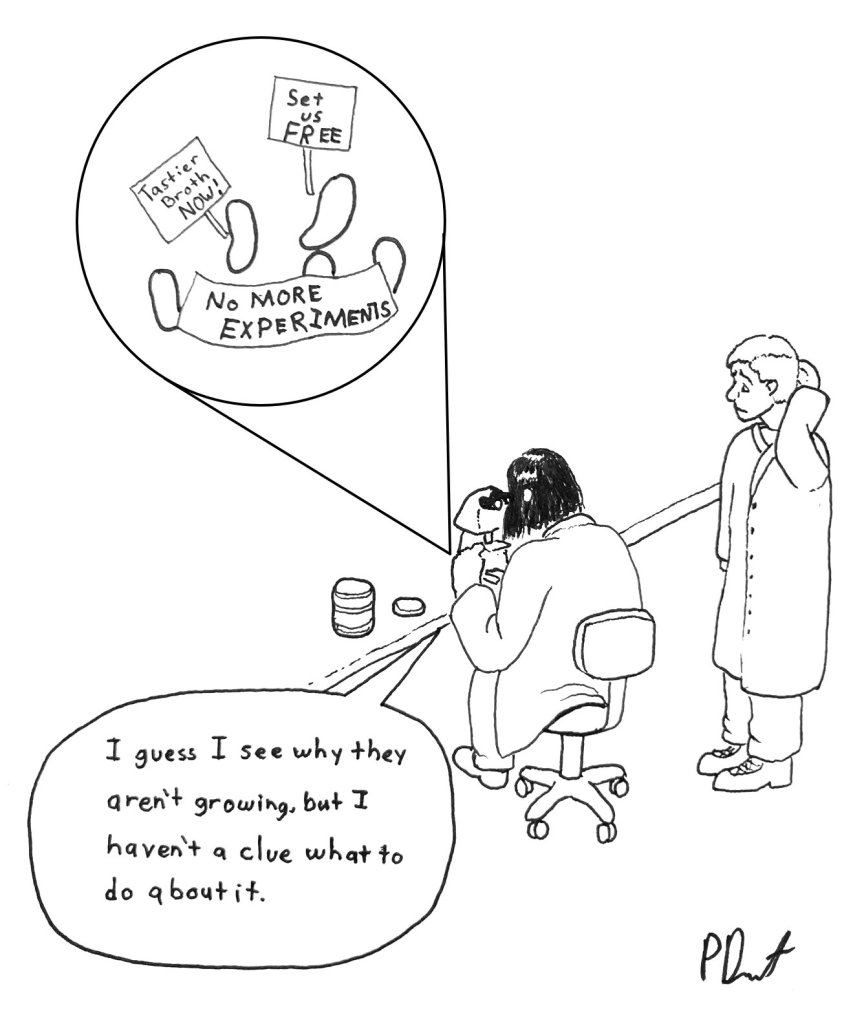
Bacteria on Strike


I have one of these. Did I rebuild my identity around it? Do I dress like the Fonz whenever I wear it? Yeah, I do.
Yesterday, as you may have noticed, Spotify experienced an outage. Over the course of about an hour, tens of thousands of people reported that they were unable to listen to music at all. Spotify fixed the problem. Life continued.
Events like this draw attention to the fact that you do not own anything you stream. Even if you buy – say – a movie on Amazon’s Prime Video, you are reliant on Amazon’s servers to continue providing that content. It might feel alarmist to say that these streaming services might not be around forever, but many of these companies are struggling (although it’s worth mentioning that Spotify’s stock in particular has risen for most of this year.) Spotify laid off a significant portion of its workforce last year, culminating in a final cut in 2023 of 17% of its workforce. It’s trying to run a business that serves a significant portion of the world on around a 30% profit margin.
These days, when streaming is above and away the most common way to watch movies or listen to music, it’s sometimes hard to remember that we used to own the means of playback for our content. If Universal Music Group had an outage of some kind, that would have no impact on your ability to listen to your CDs or watch your Blu-Ray disks. You know what? You can still live in those times today.
I purchase all my music on either iTunes or a platform called Qobuz. Both offer streaming services, but will happily sell you downloadable files which you can then hoard to your heart’s content*. You have those files forever. No one can take them away from you, whether they have a software glitch, the company goes under, or you decide not to pay for their service anymore. My car stereo even has an SD card reader, so when I turn it on, my music starts playing, just like a CD or a cassette, but with 128gb of storage.
In Canada, a Spotify subscription costs $10.99 per month. Do you listen to more than $10.99 worth of music per month? I think I actually average a little more than that, but it’s worth it to me to own the music, not have to deal with Spotify’s horrible app, and to still have access to ad-free music when I’m having a tight month. Is it harder to listen on your phone? Yes. But there are apps for that.
Buying, downloading, and curating music on your own isn’t for everyone, and I get that. I’m not saying everyone should ditch Spotify and go back to the 90’s and early aughts. All I’m saying is that if you want to, especially after the outage yesterday, it’s still possible. And it’s been working pretty well for me.
*On iTunes, you do have to manually find and convert the m4a files to mp3, which is a pain, but not impossible. Also, I’m not sure how long iTunes will actually stick around.

Really, tech companies: we don’t need AI in everything. If I open one more damn site with an AI-powered chat-bot for no reason… I swear to God.
Type 1 diabetes occupies a weird liminal space between visible and invisible disabilities. If you know what to look for, you can see the insulin pump that’s connected to me at all times. And if you were to touch where my site or sensor are, you’d feel something there. But if you didn’t notice either of those, and I didn’t tell you about it, you’d never know I was any different.
An ex of mine, when we started living together, got to see the process I go through every few days to change my site and sensor. “Wow, that really sucks,” she said. And it surprised me that it felt really good to hear. It feels like you aren’t “supposed” to let people pity you, but I didn’t feel pitied: I felt seen.
Most of the time, I handle diabetes – like we everyone handles their routine, daily struggles – alone and in silence. Most of the people in my life don’t know how much attention I pay to diabetes, how scary it can be, or how exasperatingly unknowable it is. They haven’t experienced the fear of not being able to afford supplies, or the frustration at spending more than $10,000 per year on them even when you can. They haven’t woken up at 3am four nights in a row with an urgent low blood sugar, or been confused as to why their blood sugar is high for a full 24 hours out of the blue.
To be clear, it’s often a lot easier to handle than that. There are many good, normal days. But I can never stop paying attention. And when life gets complicated for other reasons, diabetes is just another plate on the pile with dire consequences for ignoring it.
I wouldn’t want people to say it all the time, and I don’t want this condition to be the only thing people talk about with me, but sometimes, it feels nice to hear from someone with a normal pancreas that diabetes looks really hard to manage.
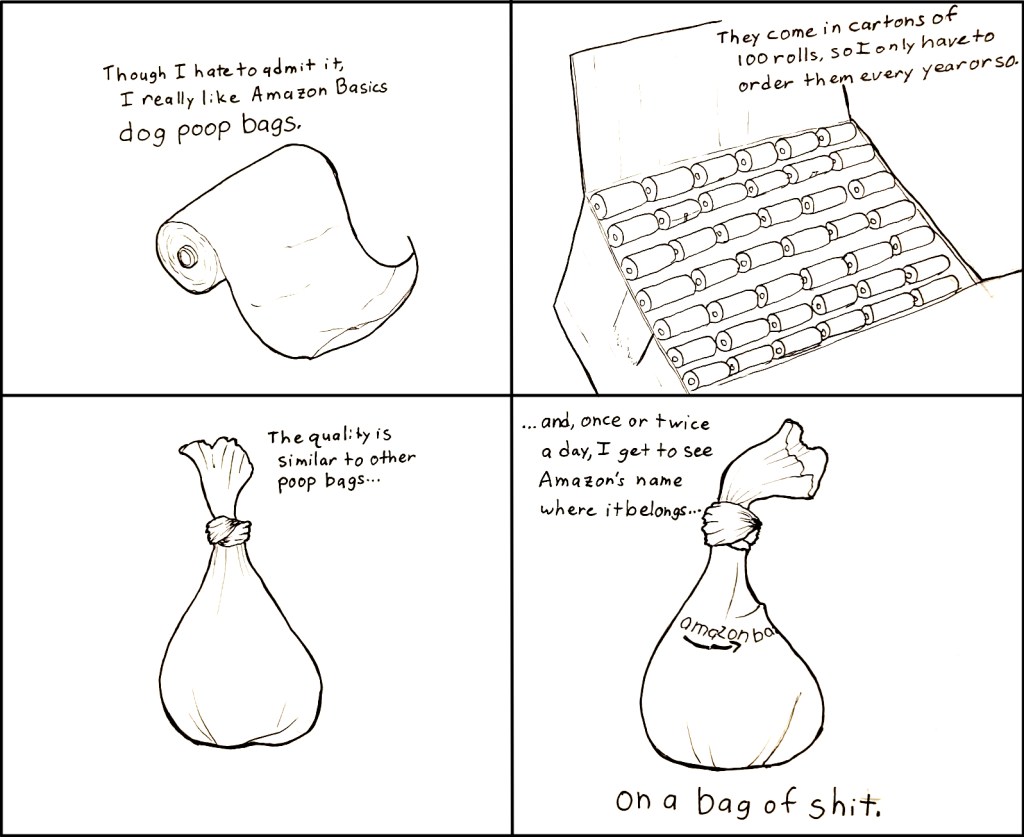
I don’t mean to hate on Amazon twice in a row. But, to be fair, they deserve it these days. Amazon used to provide a good service (despite the serious problems with worker treatment in fulfillment centres), but they’ve turned the way of all the tech giants, swinging their focus from customer service to shareholder returns. When they treat their workers better and start serving customers better (both merchant and consumer customers), I’ll happily draw a nice comic about them.

 Peter Davoust
You must be logged in to post a comment.